
Colombia: A Partnership Taking Root for Child Protection
Nearly a decade after Colombia’s peace accord, children in many communities remain exposed to the pull of armed groups. In 2023, the Dallaire Institute entered this landscape to bring a practical, contextualised, and child-centred lens to security sector actors—so they can recognise risks early and respond before recruitment takes hold.
Colombia: A Partnership Taking Root for Child Protection
In Colombia, where decades of conflict have converged with gang and cartel violence, the recruitment and use of children by armed groups remains one of the most entrenched harms. The Dallaire Institute saw the strategic importance of engaging there and across Latin America, where recruitment often follows patterns that differ from many of the African contexts we have worked in, yet inflict tragically similar harm on children. In 2023, we began to shape and ground our engagement through consultations with government, community, and civil-society partners. We built relationships with organisations working in key areas, who connected us with community leaders to map local recruitment dynamics, and we spoke to children from across the country who had left home to avoid being recruited. These relationships and conversations have anchored our work in Colombia’s realities and informed a contextualised approach.
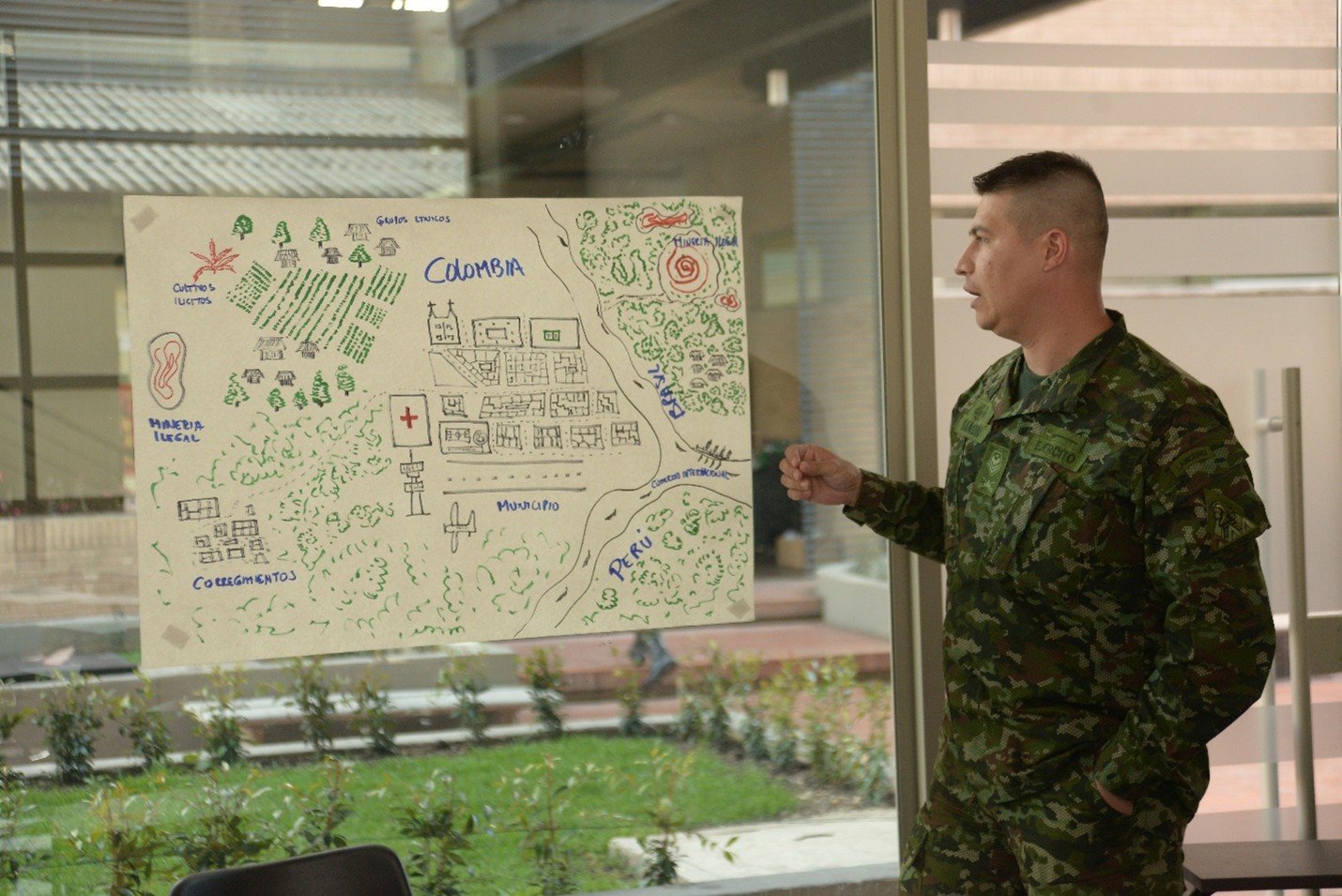
Village mapping exercise, technical mission, Bogota, September 2024
Those early conversations set our partnerships in motion in Colombia. In May 2024, we signed a Memorandum of Understanding (MOU) with the Ministry of National Defense to strengthen national capacity to prevent the recruitment and use of children in armed violence. A joint technical mission that September helped ensure the training would be grounded in Colombia’s own realities—regions marked by overlapping armed actors, deep inequality, and a fragile peace that still affects children’s lives every day.
Scenario-based training that builds a shared language of protection
Less than a year later, the MOU and collaboration moved into action. In May 2025, the Dallaire Institute and the Ministry of National Defense co-delivered the first Basic Course on the Prevention of Child Recruitment and Use in Bogotá. The course introduced two key innovations: it integrated the Colombian context into the Dallaire Institute’s curriculum, with Colombian instructors leading the first day, and it brought civilian and military participants together in the same room. Sixty-one participants from the Armed Forces, National Police, the Attorney General’s Office, Humanitarian Support Group for Demobilized Combatants (GAHD), and the Colombian Institute of Family Welfare (ICBF) trained together as a joint cohort on preventing child recruitment, using scenarios that highlighted where their mandates intersect along the protection pathway—from first contact in the field to referral and the restoration of rights—and helped them recognize where their own roles are most relevant.
Before the training, many participants had never worked directly with colleagues from outside their own institution. The course’s scenario-based learning placed them in real-life situations—decisions during field operations, moments of encounters with children, and coordination between agencies—that demanded joint reflection. The experience broke down barriers and began to build a shared language of protection.
One police officer described the change in her understanding:
“As a police officer, this was the first time I had ever heard about peacekeeping missions and about international standards of practice. I feel that this has given me a different perspective on how to protect children in my role.”
During a scenario-based exercise that used a realistic training prop gun, a civilian participant from ICBF echoed the sentiment:
“This was the first time I’d ever held a gun. And when I saw the child pointing the gun at me, I felt like my heart was coming out of my chest. As a civilian, I only encounter children once they’ve been recovered by the military and across a desk. This course has made me come face to face with the reality of how complex it is to safeguard children in field operations.”
By the end of the course, participant assessments showed a clear shift: most said they had “learned the right way to see the recruited child as a victim,” not an enemy. This perspective is already influencing how they understand their responsibilities within the security forces—changing how they plan operations and how they interact with children in the field. Several noted that it is “vital to consider children as a priority to protect,” and that this reframing “changed [their] role when interacting with them.”
Following the first training, then–Vice Minister of Defense for Defense and Security Policies Juliana Coronado expressed appreciation for the Dallaire Institute’s collaboration:
“The Ministry of National Defense of Colombia remains committed to advancing this line of work and looks forward to further opportunities to cooperate with the Dallaire Institute. Your organization is, without doubt, a strategic partner in our national efforts to prevent the recruitment and use of children.”
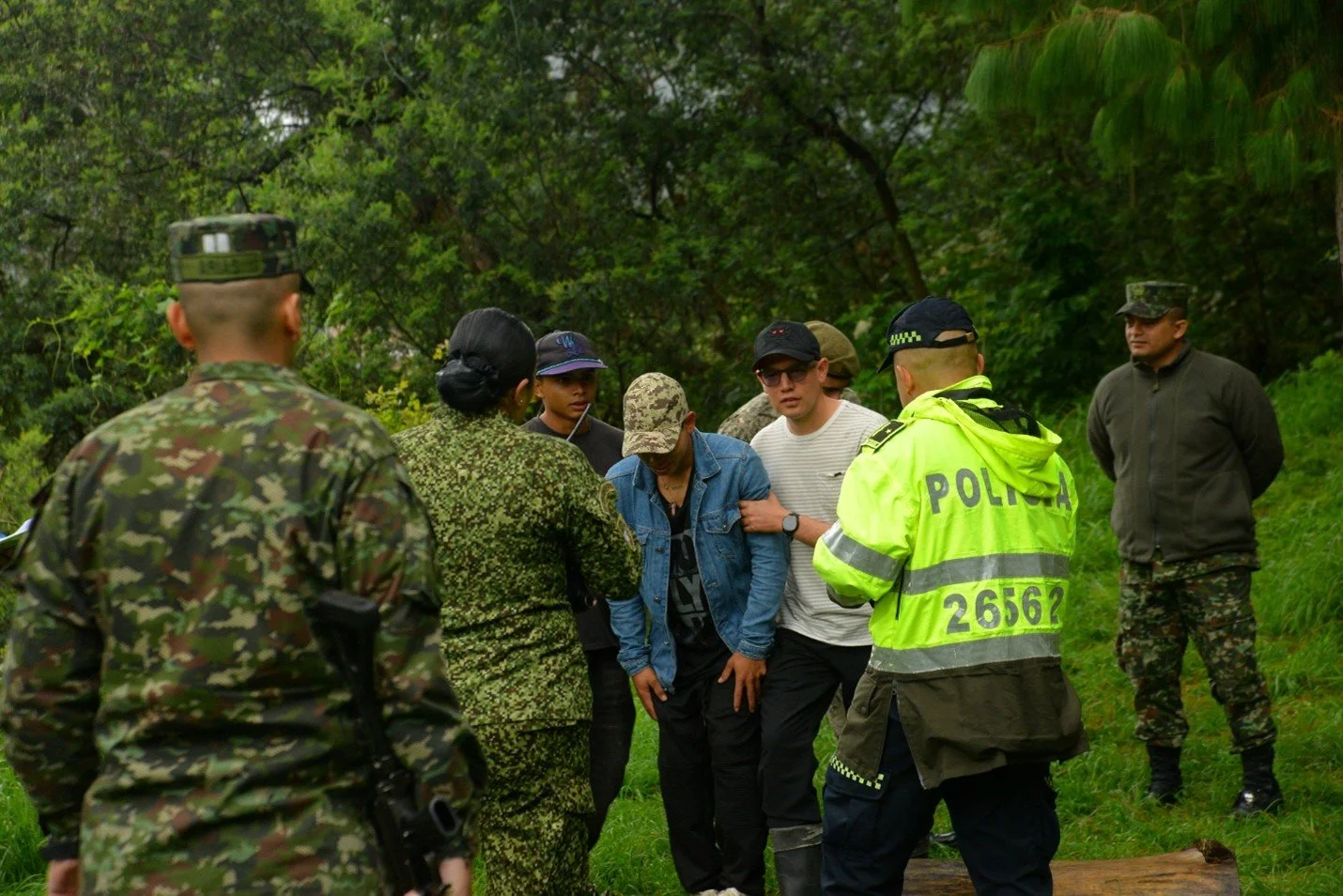
Scenario-based Training, Basic Course, Bogota, May 2025
From first steps to lasting change
By October 2025, when the Dallaire Institute returned to Bogotá for the second Basic Course, early lessons were already taking root. About forty participants—again a mix of military and civilian professionals—took part. Several asked to be trained as facilitators for future cohorts, exactly in line with our plans. Through forthcoming Training-of-Trainers courses, we will equip Colombian facilitators to lead the programme themselves, embed know-how inside their institutions, and grow the impact in ways that fit local realities. That is the heart of our approach: build what lasts and put it in local hands.
Alongside the courses, we are helping strengthen the system that surrounds those practitioners. Working with the Ministry’s Humanitarian Support Group for Demobilized Combatants (GAHD), we are supporting updates to the Ministry of National Defense’s policy on preventing the recruitment and use of children, including practical guidance for what security personnel should do when they encounter or recover children during operations. The guidance—applicable to both the Armed Forces and the National Police—sets roles and procedures for a coordinated, humanitarian response with the relevant authorities, grounded in comprehensive protection, the best interests of the child, the prevention of re-victimization, and international child-protection standards.
These collaborations move beyond short-term training to lasting change, incorporating the Dallaire Institute’s approach so that preventing child recruitment becomes part of how future officers are trained and assessed. During the October mission, the Dallaire Institute also met with the United Nations Verification Mission in Colombia, which expressed interest in engaging its regional child-protection focal points in future trainings—reflecting growing recognition of the initiative’s relevance within Colombia’s broader peacebuilding efforts.
Impact through everyday decisions
The partnership between the Dallaire Institute and Colombia’s institutions is still young, but its impact is beginning to show. What started as a series of conversations has grown into a community of military, police, and civilian practitioners working side by side to protect children in complex security environments. Together, they are internalizing the Dallaire Institute’s innovative approach to preventing child recruitment—building awareness, changing behaviour, and integrating child protection into their own professional culture.
For the Dallaire Institute, success is not measured in the number of trainings delivered, but in what happens afterward: when practitioners apply what they’ve learned, when institutions change how they operate, and when the protection of children becomes routine. Progress appears in small, often unseen moments—when a soldier, police officer, or social worker pauses to assess risk differently, acts with a child’s safety in mind, and coordinates with others to find the right response. Each of those choices makes recruitment a little harder to take hold. And when those choices become habit across a system, prevention becomes part of how peace is sustained.